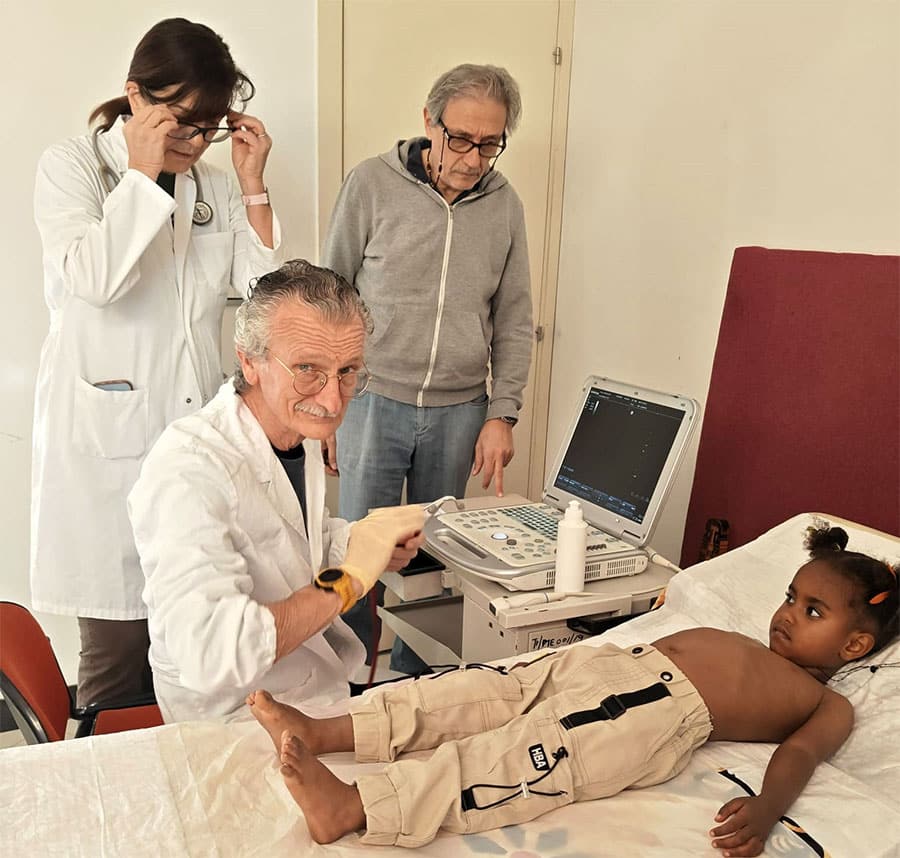
From January 22 to 30, 2026, at the DayAfterDay center in Quihà, a total of 114 patients were examined and underwent echocardiographic evaluation, including 40 children aged between 1 and 15 years.
The detailed results of the screening are as follows:
- 55 patients with rheumatic valvular heart disease
- in 39 of these, mitral stenosis was the predominant lesion
- 20 patients were considered suitable candidates for percutaneous commissurotomy (favorable anatomy, absence of left atrial thrombosis, mild regurgitation)
- 9 presented with mitral stenosis associated with moderate or severe aortic regurgitation
- 4 had mixed mitral valve disease with predominant regurgitation
- 1 patient presented with mitral stenosis associated with severe tricuspid steno-regurgitation
- 3 showed combined mitral and aortic regurgitation
- 3 were carried of prosthetic valves, one of which was dysfunctional
- in 39 of these, mitral stenosis was the predominant lesion
- 57 patients with congenital heart disease, predominantly children
- The most frequent defect observed was patent ductus arteriosus, either either isolated or associated with other anomalies (atrial septal defect, aortic coarctation, pulmonary valve stenosis).
- In 6 patients, the ductus was considered suitable for percutaneous closure
- 18 patients had an atrial septal defect (often associated with other abnormalities). Among these:
- 2 are candidates for percutaneous closure
- 4 require further anatomical assessment with transesophageal echocardiography to determine the feasibility of percutaneous closure
- 1 child had an isolated ventricular septal defect
- 3 patients were affected by pulmonary valve stenosis deemed suitable for valvulotomy
- 4 patients presented with complex congenital heart disease (tricuspid atresia, tetralogy of Fallot, atrioventricular canal defect, Ebstein’s anomaly)
- The most frequent defect observed was patent ductus arteriosus, either either isolated or associated with other anomalies (atrial septal defect, aortic coarctation, pulmonary valve stenosis).
- 7 patients without significant heart disease
During the activity, 4 patients were considered clinically critical and were urgently referred to Mekelle Hospital:
- 1 for endocarditis
- 2 for valvular disease with clear signs of heart failure
- 1 for prosthetic valve dysfunction likely due to endocarditis.
Overall, 31 patients (27%) were considered treatable through percutaneous procedures.
In addition, ongoing medical therapy was reviewed in all patients, with confirmation or adjustment based on their clinical condition.
The wide range and severity of cardiac conditions observed in the majority of the examined population highlight the crucial importance of preventive activities in a setting where heart disease is highly prevalent.
Unfortunately, the issue remains unresolved for many patients who have a clear and urgent indication for surgical intervention but cannot be treated due to the lack of adequate facilities, in a context where financial resources are extremely limited.